Are Tea Bags Bad for You? Microplastics, Chemicals & Why Loose-Leaf Wins
A 2019 McGill study found a single plastic tea bag releases 11.6 billion microplastics into your cup. We unpack what's really steeping — and why loose-leaf is the cleaner, more honest choice.
Sameera
May 12, 2026 · 10 min read
There is something deeply ritualistic about making a cup of tea. The kettle's slow build to a boil, the curl of steam, the slow blush of colour spreading through hot water — it is one of the simplest, most comforting acts in daily life. For millions of people, that ritual involves dropping a tea bag into a mug and walking away.
But what if that tea bag is doing something you never intended? What if, in the act of brewing, it is releasing far more than flavour?
The science emerging around tea bags — particularly modern ones — paints a troubling picture. Microplastics, bleaching agents, chemical adhesives, and synthetic bonding compounds may all be finding their way into your cup, quietly, cup after cup, year after year.
This is not alarmism. It is chemistry.
**A Brief History of Compromise**
The tea bag was invented by accident. In 1908, New York tea merchant Thomas Sullivan began sending tea samples to clients in small silk pouches. His customers, misunderstanding the intent, simply dropped the whole pouch into boiling water — and found they rather liked the convenience.
What followed was a century of industrial refinement driven not by quality, but by efficiency. Silk gave way to gauze; gauze gave way to paper; paper gave way to nylon; nylon gave way to the sleek, silky-looking pyramid bags now marketed as a premium product.
At every step, the driving force was cost and convenience — not the welfare of the person drinking the tea.
**Microplastics: The Invisible Ingredient**
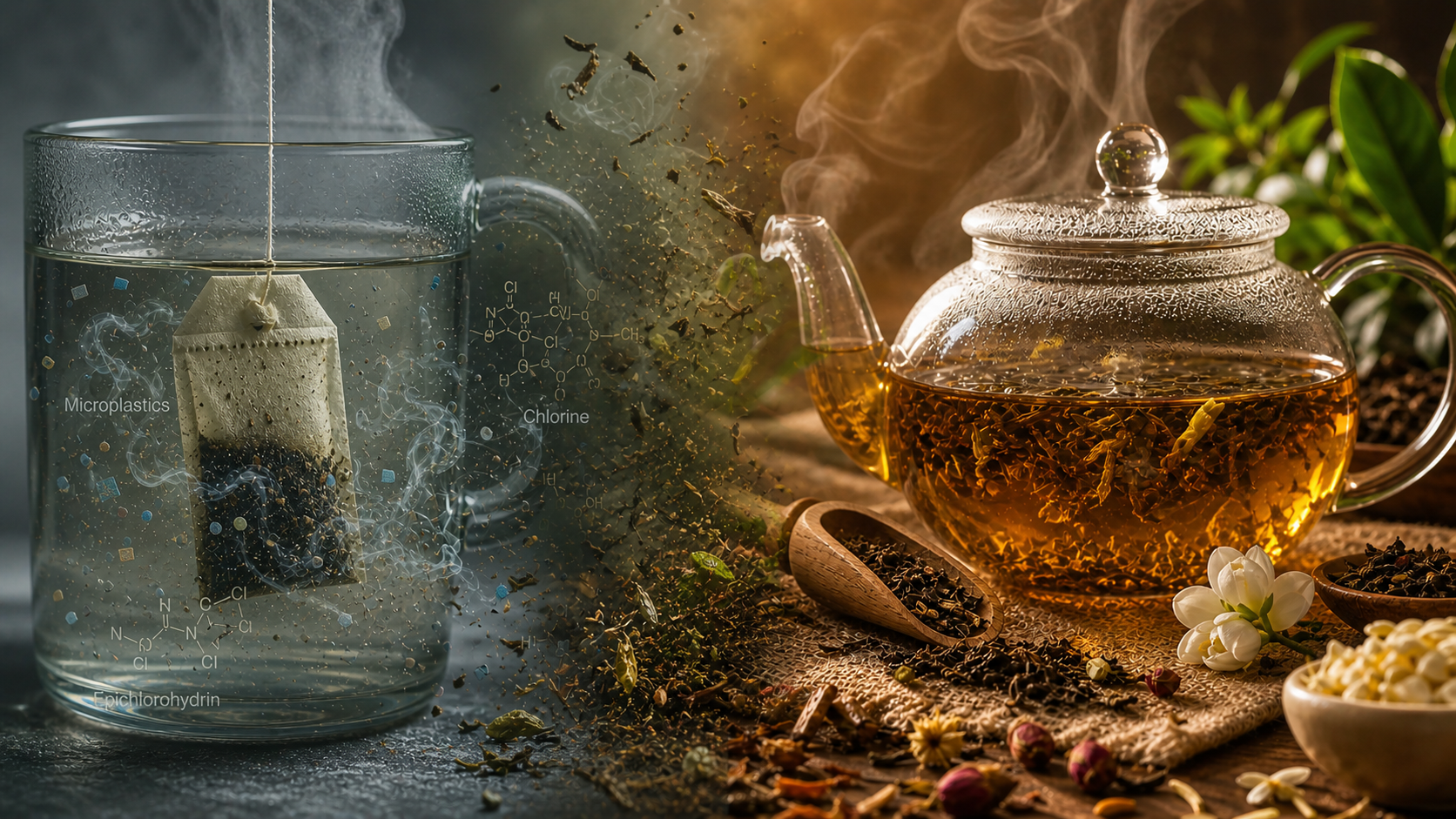
The most significant finding in recent years concerns plastic tea bags — particularly the pyramid-style mesh bags used by many premium brands. These are typically made from nylon, polyethylene terephthalate (PET), or polypropylene.
In 2019, researchers at McGill University in Montreal published a landmark study in *Environmental Science & Technology*. They found that a single plastic tea bag, steeped at 95°C (the standard brewing temperature for black tea), released approximately **11.6 billion microplastic particles** and **3.1 billion nanoplastic particles** into a single cup of tea.
To put that in perspective: that is several orders of magnitude higher than the microplastic levels found in any other food or beverage previously studied.
These particles are not benign. Microplastics have been shown to accumulate in human tissue — they have been found in the lungs, liver, blood, placenta, and even breast milk of human subjects. Research is still catching up with the full implications, but what is known is not reassuring: microplastics can carry chemical additives from the plastic itself — plasticisers, flame retardants, UV stabilisers — that are known endocrine disruptors.
When you brew a plastic tea bag, you are not just making tea. You are making a microplastic suspension and drinking it by choice.
**Paper Bags Are Not Off the Hook**
You might be thinking: I use paper tea bags, so I am safe. Unfortunately, it is more complicated than that.
*Chlorine bleaching.* Most white paper tea bags are bleached with chlorine or chlorine dioxide to achieve their clean, bright appearance. This process can result in residual organochlorine compounds in the paper — including dioxins and furans, which are persistent organic pollutants associated with immune system damage, hormonal disruption, and carcinogenicity at chronic low-level exposure. Some manufacturers have shifted to oxygen-bleached or unbleached bags, but these remain in the minority and labelling is inconsistent. Unless your tea bag is explicitly marked as unbleached, you should assume it has been chemically whitened.
*Epichlorohydrin — the wet-strength agent.* Perhaps the most concerning chemical in paper tea bags is one almost no one has heard of: epichlorohydrin. It is added to paper during manufacturing as a "wet strength agent" — it stops the paper from disintegrating when it gets wet. Without it, your tea bag would fall apart in hot water. It is a genuinely useful industrial chemical. It is also a probable human carcinogen.
Epichlorohydrin is classified by the International Agency for Research on Cancer (IARC) as a Group 2A substance — *probably carcinogenic to humans*. It hydrolyses in hot water to form 3-MCPD (3-monochloropropane-1,2-diol), a compound with demonstrated carcinogenic effects in animal studies and a substance of active concern to food safety regulators in Europe and beyond. The European Food Safety Authority has published tolerable daily intake limits for 3-MCPD. The uncomfortable truth is that this compound should not be in your tea in any amount — and currently, in most paper tea bags, it is.
*Adhesives and heat-seal coatings.* Many paper tea bags are sealed not with a staple or a string, but with heat — using a thin strip of thermoplastic polymer along the top edge. When that strip is exposed to boiling water, it can leach plastic compounds directly into the brew. Similarly, the inner surfaces of many paper bags are coated with food-grade polymers to improve structural integrity and reduce seepage. These coatings are considered safe at room temperature. Under sustained exposure to near-boiling water, the behaviour of these polymers becomes less predictable, and the safety data is less robust.
**The Tea Inside the Bag**
There is a further, less-discussed issue: the tea itself inside the bag.
Loose-leaf tea sold at quality retailers is often subject to rigorous quality control and may come from estates with transparent sourcing practices. Tea inside mass-market tea bags, by contrast, is often a blend of lower-grade fannings — the dust and small broken particles left over from the processing of higher-grade whole-leaf tea.
Because fannings are fine particles, they present a larger surface area relative to their mass. Pesticide residues, which in whole-leaf tea remain largely on the outer surface, are distributed more thoroughly through fannings. A 2023 report by a European consumer advocacy group found that multiple major tea bag brands exceeded European Maximum Residue Levels for certain pesticides.
When you brew a tea bag, there is no filtration. The entire contents — including any residues — steep directly into your water.
**The Cumulative Exposure Argument**
Taken individually, any one of these concerns might be considered marginal. Regulators would argue that the concentrations involved fall within tolerable ranges. In isolation, that argument has some merit.
But the critical concept is cumulative exposure.
If you drink two to four cups of tea per day using conventional tea bags — a common habit across the world — you are not facing a single isolated exposure event. You are facing a daily, sustained intake of microplastics, potential epichlorohydrin hydrolysis products, bleaching residues, and pesticide traces, compounded over years and decades.
We do not yet have long-term longitudinal studies on the specific health effects of tea bag chemicals consumed over a lifetime. But we do not need that data to apply a basic precautionary principle: if a risk can be eliminated easily, at no cost to quality — in fact, with significant *improvement* to quality — then it should be eliminated.
**The Loose-Leaf Alternative: Not a Step Backwards**
Here is where the story becomes genuinely optimistic.
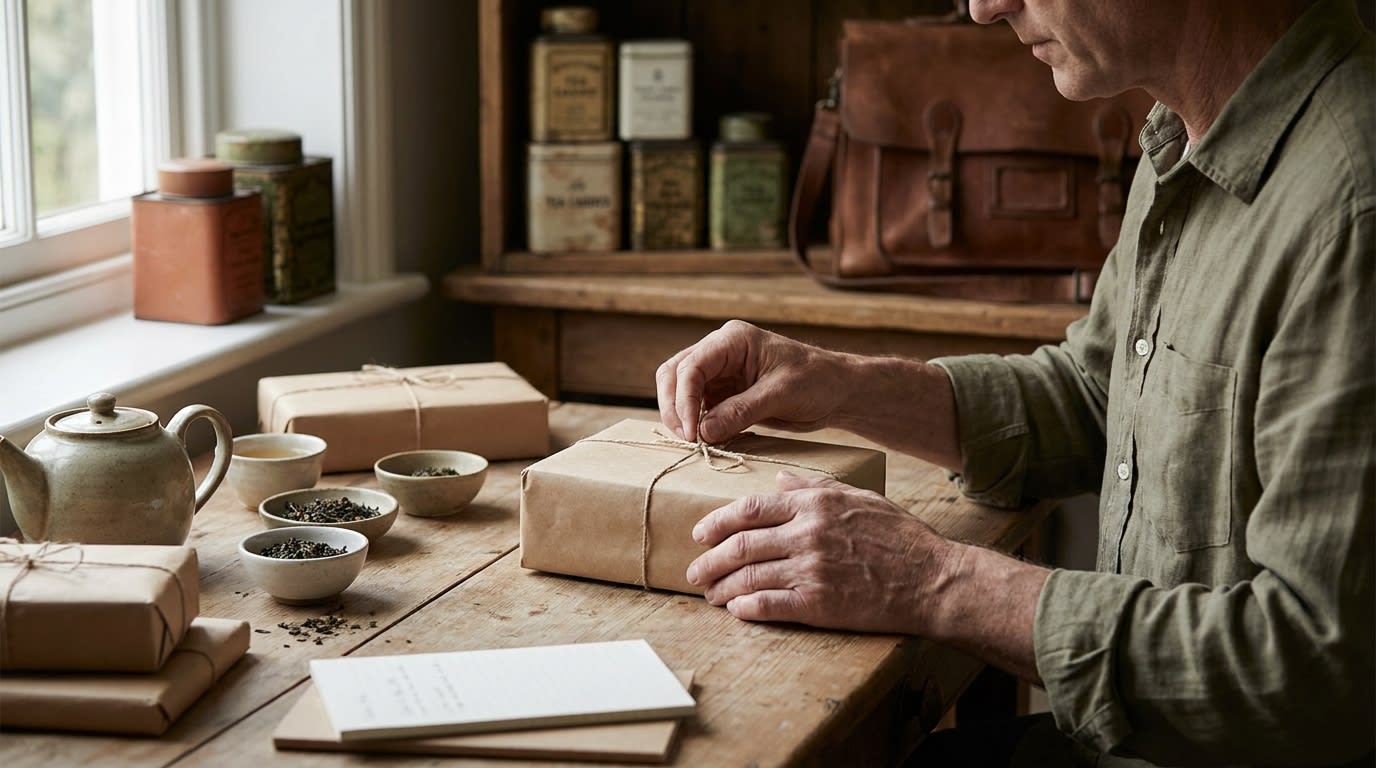
Loose-leaf tea is not an artisanal affectation or an expensive inconvenience. It is simply tea as it has been made for centuries — without the industrial packaging intermediaries that create these risks.
Brewed in a teapot with a strainer, in a stainless steel or ceramic infuser, or in a French press dedicated to tea, loose-leaf tea delivers:
• **No microplastics.** No plastic mesh, no polymer seal, no heat-strip adhesive.
• **No bleaching agents.** No paper product is involved in the brewing process.
• **No epichlorohydrin.** No wet-strength paper means no need for it.
• **Better tea.** Whole or near-whole tea leaves have more surface area for flavour compounds, more intact essential oils, and produce a more nuanced infusion. The difference is not subtle — it is dramatic. A well-brewed loose-leaf cup has body, length, and aftertaste a tea bag simply cannot match.
• **Real transparency.** Quality loose-leaf tea is traceable — you can know the garden, the region, the harvest, and the processing method. The opacity of the tea bag, literal and figurative, disappears.
The tools required are minimal and inexpensive. A stainless steel ball infuser costs less than a box of tea bags and lasts indefinitely. A small teapot with a built-in strainer is an investment measured in the tens of dollars that will serve you for a decade.
**A Note on "Natural" and "Biodegradable" Claims**
The tea industry has responded to growing concern with a wave of marketing language: "plant-based mesh," "biodegradable bags," "natural silk," "corn starch pyramid bags." These deserve scrutiny.
PLA (polylactic acid) bags, made from corn starch and marketed as biodegradable, still release microplastic-like particles when brewed in hot water. A 2023 study confirmed that PLA bags shed particles at temperatures consistent with tea brewing. "Biodegradable" describes what happens at end-of-life under industrial composting conditions — not what happens in your mug at 90°C.
Abacá and hemp paper bags, used by some natural brands, avoid the plastic mesh problem, but may still involve bleaching and wet-strength additives unless explicitly stated otherwise.
The only truly clean vessel for brewing tea is one that contains no bag at all.
**Making the Switch: A Practical Guide**
Transitioning to loose-leaf tea does not require an overhaul of your kitchen or an encyclopaedic knowledge of tea varieties. Here is a simple path forward.
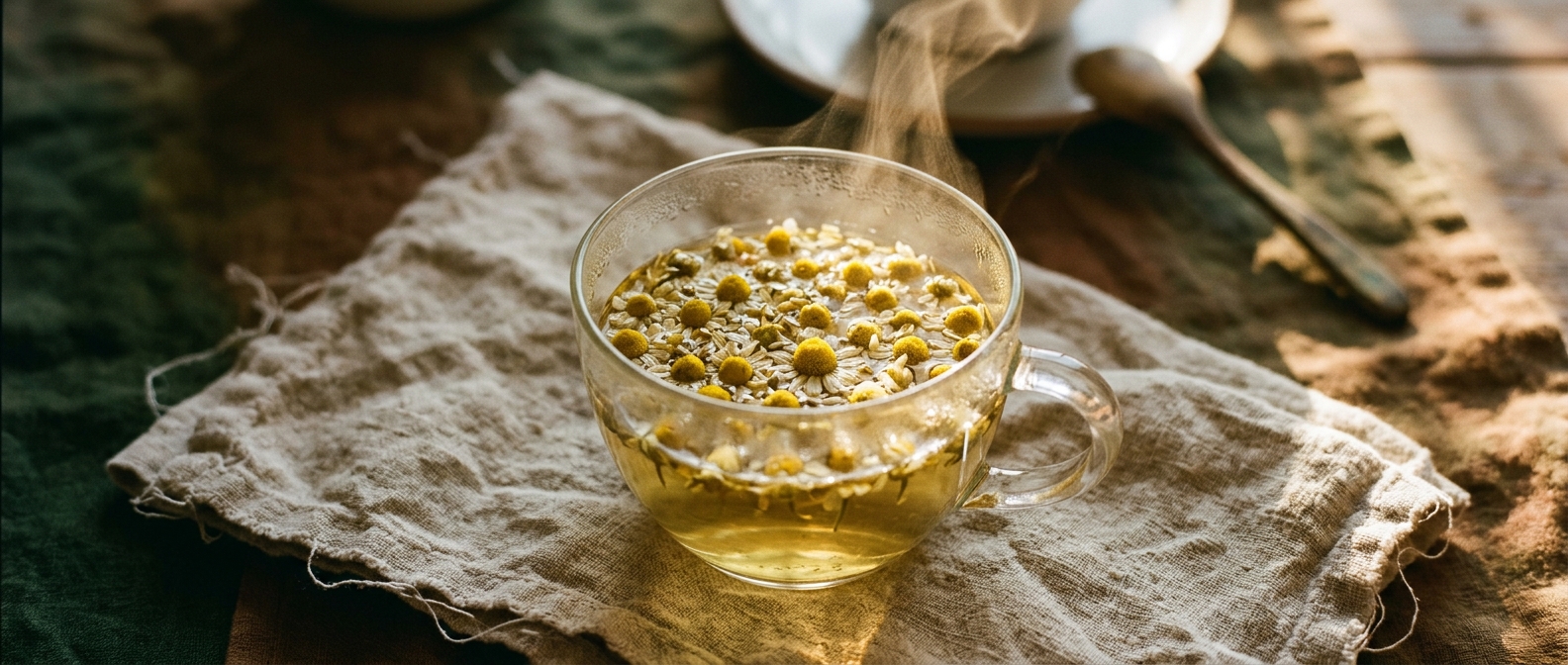
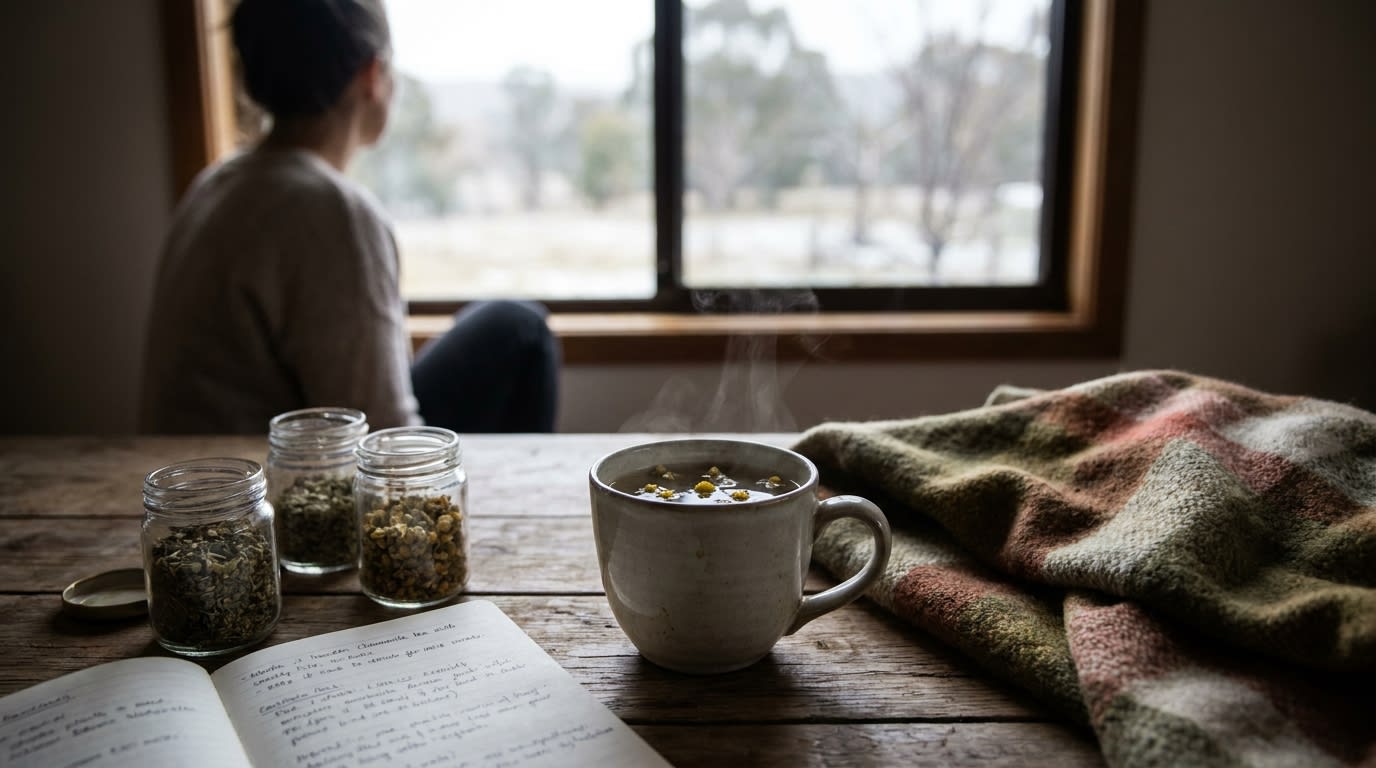
*Start with what you already love.* If you drink English Breakfast, buy a loose-leaf English Breakfast blend. The flavour will be recognisable but noticeably better. The same applies to Earl Grey, green tea, chamomile, or any other variety in your cupboard.
*Choose a simple brewing method.* A stainless steel mesh infuser that fits over your mug is the lowest-friction entry point. No additional equipment required. One heaped teaspoon per cup, the right water temperature, and the patience to let the leaves unfurl.
*Adjust to taste.* That is, after all, the pleasure of the process. More leaf for stronger tea; shorter steep for a lighter cup. You are now in control of variables a tea bag never let you near.
*Explore, gradually.* Once you are comfortable, the world of loose-leaf is extraordinary in depth: single-estate Darjeeling first flush teas, hand-rolled oolongs, aged sheng pu-erh, Japanese gyokuro. None of it is available in a tea bag — and none of it should be.
**The Bigger Picture**
The tea bag is a product of the twentieth century's love affair with convenience — a love affair whose costs we are still tallying. We accepted, without much thought, an industrial intermediary between ourselves and one of the world's oldest, healthiest, and most pleasurable beverages. We wrapped our tea in bleached paper treated with carcinogenic wet-strength agents, or in plastic mesh that sheds billions of particles per brew, and we called it progress.
It was not progress. It was a shortcut.
The good news is that returning to loose-leaf tea is not a sacrifice. It is a recovery — of flavour, of transparency, of a ritual that deserves to be untarnished by industrial chemistry.
Your cup of tea should contain tea, water, and nothing else.
It can. It should. And now you know why.
---
**Related reading.** Once you've moved to loose-leaf, the spent leaves have a beautiful second life — see From Cup to Soil: How Used Tea Leaves Become Your Garden's Finest Fertilizer for the full guide to feeding your plants with what's already in your cup.
Follow The Tea List