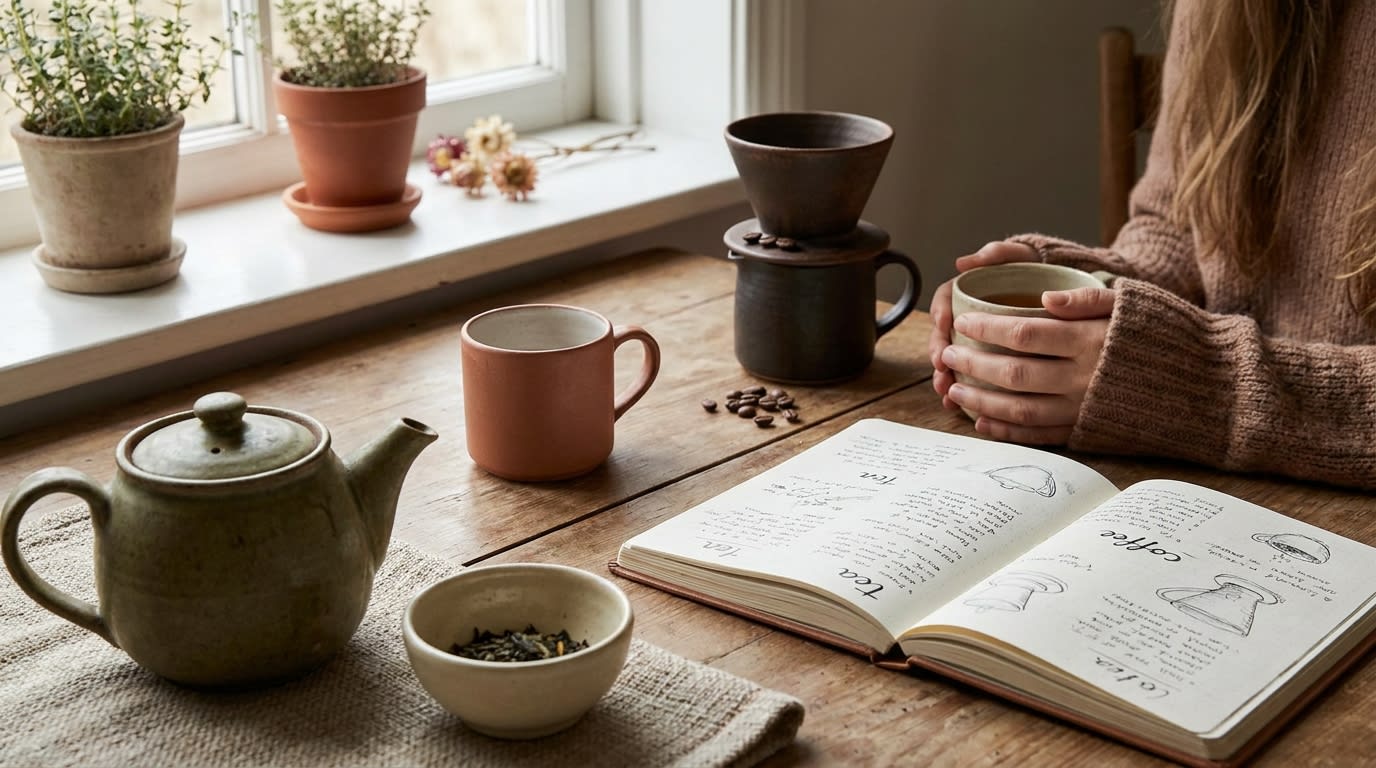
From Cup to Soil: How Used Tea Leaves Become Your Garden's Finest Fertilizer
Every cup of tea you brew holds a second life. Used tea leaves and compostable bags are quietly one of the best free fertilizers a gardener can have — gentle, slow-release, and nutrient-rich. Here's how to use them properly.
Sameera
May 24, 2026 · 9 min read
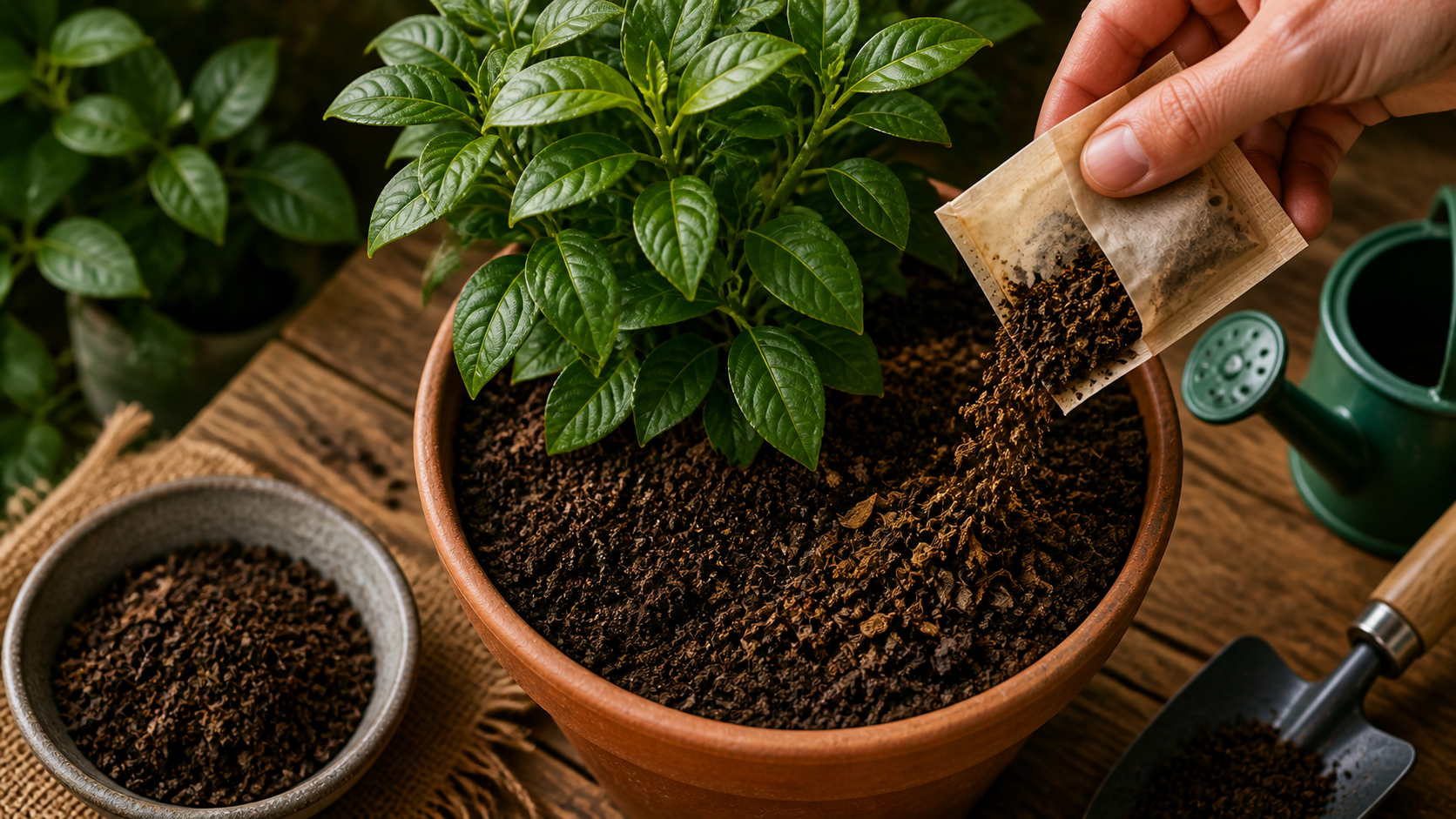
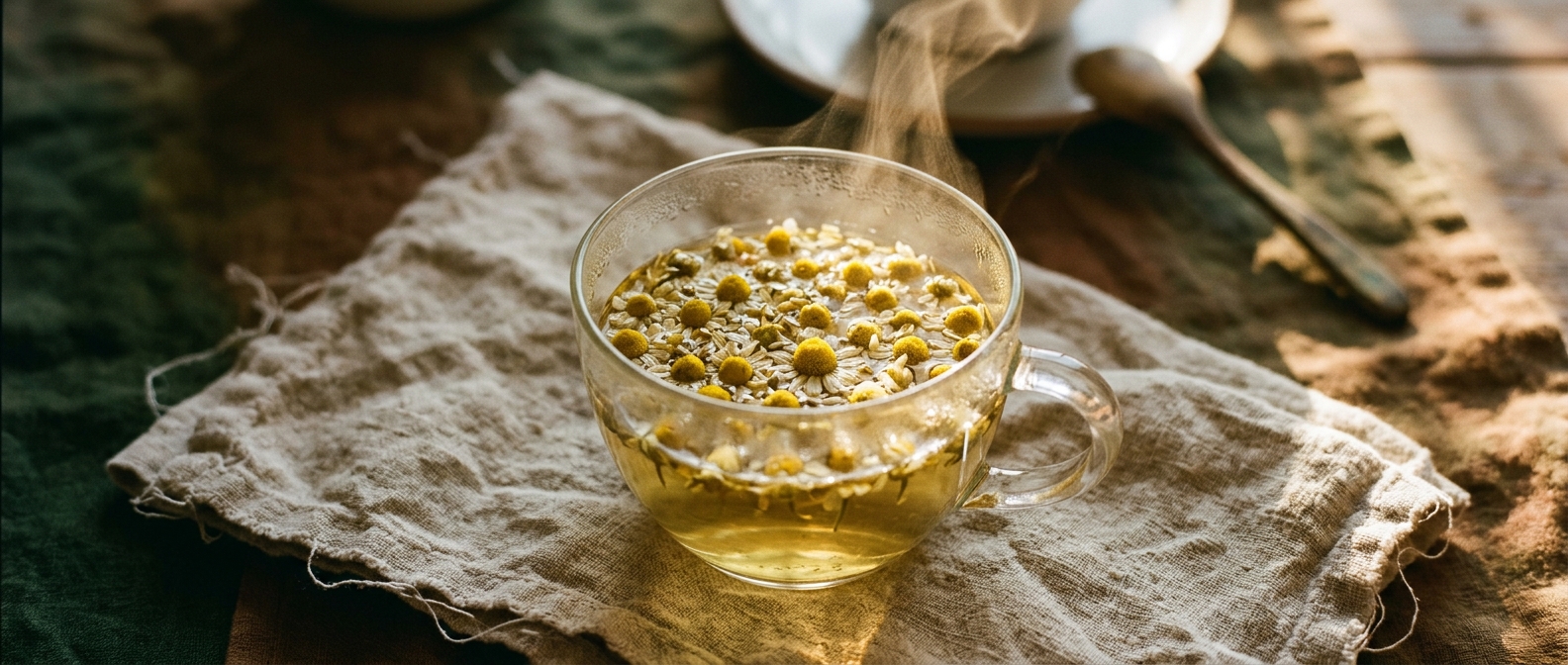
*Every cup of tea you brew holds a second life. Tuck those spent leaves into the soil and watch your garden return the favour.*
**Why tea leaves make brilliant fertilizer**
Long before synthetic fertilizers existed, spent tea leaves were scattered across kitchen gardens as a matter of course. Today, as gardeners rediscover organic practices, this humble habit is finding renewed appreciation — and science has caught up to confirm what our grandparents knew instinctively.
Tea leaves are a genuinely remarkable amendment. They decompose steadily, releasing nutrients over weeks rather than dumping them all at once, which is exactly how plant roots prefer to feed. They also introduce beneficial organic matter that improves soil texture, water retention, and microbial diversity — the living community beneath every thriving garden.
A single cup of brewed tea leaves behind roughly 2–4 grams of dry organic matter. If you're a daily tea drinker, that's over a kilogram of free, nutrient-rich soil amendment every year — heading straight to your plants instead of landfill.
**The nutritional profile**
Used tea leaves are a gentle, balanced fertilizer. They're not a replacement for a broad soil programme, but they contribute several key nutrients and a wealth of organic matter that your plants and soil microbes genuinely appreciate.
*Nitrogen (N).* Tea leaves contain roughly 4% nitrogen by dry weight — the same nutrient that drives leafy green growth and rich foliage colour.
*Potassium (K).* Supports strong root development, disease resistance, and the quality of flowers and fruit. Present in modest but useful amounts.
*Phosphorus (P).* Vital for energy transfer within the plant and healthy blooms. Tea leaves provide a gentle, slow-release source that won't burn roots.
*Tannins & acids.* Naturally acidic compounds that gently lower soil pH over time — a bonus for acid-loving plants like blueberries, roses, and ferns.
*Organic matter.* Feeds soil microbes and earthworms, improving aeration, drainage, and the soil's ability to hold moisture and nutrients.
*Micronutrients.* Manganese, zinc, fluoride, and trace minerals that support enzymatic functions and overall plant health.
**Plants that love tea**
Tea's natural acidity (most spent leaves sit around pH 6–7, with some residual tannins) makes it particularly welcome around plants that thrive in neutral-to-acidic conditions. Roses, blueberries, ferns, tomatoes, strawberries, hydrangeas, camellias, azaleas, rhododendrons, herbs, lettuce, spinach, and most houseplants all respond beautifully.
Plants that prefer alkaline soil — such as clematis, lavender, and many brassicas — are better served by other amendments. For them, reserve tea for the compost heap rather than direct application.
**Which teas work best?**
*Loose-leaf tea — the gold standard.* All true teas — black, green, white, oolong, pu-erh — come from *Camellia sinensis* and make excellent soil amendments. Green tea leaves decompose quickly and provide a nitrogen boost; black and oolong leaves break down more slowly for a longer nutrient release. Simply scatter, rake in lightly, or add to your compost.
*Paper tea bags.* Most traditional paper tea bags are made from wood pulp, hemp, or abaca fibres and are fully compostable. You can bury whole bags in the soil — the paper breaks down within a few weeks, and earthworms find the moist interior irresistible. Always tear open stapled bags first and remove any metal staple before adding to soil or compost.
*Herbal and fruit tisanes.* Chamomile, peppermint, hibiscus, and most other herbal infusions are also safe and beneficial. Chamomile in particular has mild antifungal properties that can help suppress damping-off disease in seedlings. However, avoid citrus-peel blends in large quantities near plants sensitive to high acidity.
⚠️ *A word of warning on "silken" pyramid bags.* Plastic-mesh pyramid bags do not decompose. Remove the tea leaves from these bags before using — never bury the bag itself. Similarly, always check the packaging to ensure bags contain no synthetic fibres before composting.
**How to use tea around your plants**
There are several simple methods, each suited to different plants and gardening styles. Choose one — or combine them throughout your garden.
*Method 1 — Direct soil amendment.* Allow used tea leaves to cool completely after brewing. Scatter a thin layer (1–2 cm) of leaves around the base of plants, keeping them away from direct stem contact to prevent rot. Lightly rake the leaves into the top layer of soil, or leave them on the surface as a living mulch. Water as normal — moisture activates decomposition and nutrient release. Repeat weekly or whenever you have spent leaves to spare. There is no need to measure precisely; a little and often is the ideal rhythm.
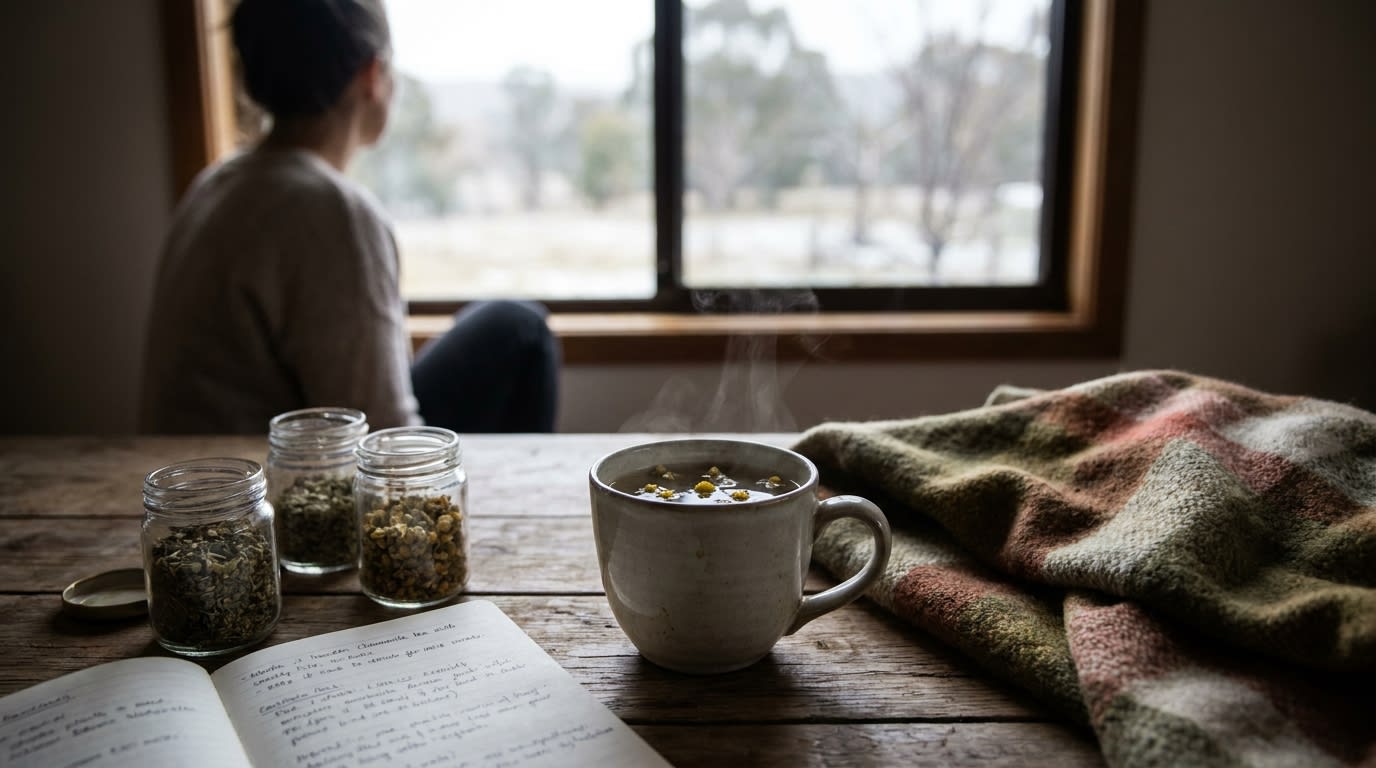
*Method 2 — Liquid tea feed (brewed compost tea).* Collect a week's worth of used tea leaves in a large jar or bucket. Add roughly one litre of water per two tablespoons of leaves. Let the mixture steep for 24–48 hours at room temperature, stirring occasionally. Strain out the leaves (add them to compost) and use the liquid to water your plants at the base. This mild liquid fertilizer is excellent for container plants and seedlings where direct leaf application can feel messy.
*Method 3 — Compost enrichment.* Add used tea leaves and paper bags directly to your compost bin at any time. Tea leaves are classified as a "green" (nitrogen-rich) compost ingredient — balance them with "browns" like cardboard, dried leaves, or straw. They decompose rapidly and activate the compost heap, helping other materials break down faster.
*Method 4 — Mulching and moisture retention.* A generous layer of cooled, damp tea leaves around the base of container plants and border perennials acts as a moisture-retaining mulch. This is particularly useful in summer and for shallow-rooted plants like strawberries. The leaves suppress minor weed germination as an added bonus.
🌿 *Pro tip for houseplants.* For indoor houseplants, the liquid feed method is cleanest and most effective. Use cooled, diluted tea water as a monthly supplement to your usual watering routine for glossier leaves and more vigorous growth.
**Common mistakes to avoid**
Tea fertilizer is forgiving, but a few missteps can undermine its benefits or introduce problems. Here is a clear-eyed look at what to do — and what to avoid.
*Do this.* Let leaves cool before applying — heat can shock roots and encourage fungal spores to germinate. Apply in moderation — a thin, frequent dressing is far better than a thick, infrequent one. Rake leaves into the soil or water after application to begin decomposition. Remove staples and check for synthetic bag materials before composting. Use plain, unflavoured tea for best results in the garden. Test your soil pH periodically to track any shift from ongoing tea use.
*Avoid this.* Don't pile leaves thickly against plant stems — this traps moisture and promotes crown rot. Don't use tea with added milk, sugar, or sweetener — these attract pests and encourage harmful fungal growth in the soil. Don't apply excessively to plants that prefer alkaline soils — lavender, clematis, and most brassicas can struggle with increased acidity. Don't bury plastic or synthetic mesh bags — they will not decompose and will fragment into microplastics. Don't rely solely on tea — it is a supplement, not a complete fertilizer. Combine with compost and a balanced feed programme. Don't leave wet leaves on the surface for extended periods in humid weather without raking them in — mould can develop.
⚠️ *Milk and sugar teas — set them aside.* If you enjoy your tea with milk, set those cups aside from your garden routine. Milk residue in soil attracts slugs, fungus gnats, and flies, and can cause unpleasant fermentation close to plant roots. The same applies to heavily sweetened chai or flavoured blends with syrups — use these for your own enjoyment, not for the garden.
**The bigger picture**
Beyond the nutrients, there is something quietly profound about returning what the earth gave us. Tea is grown in soil, harvested by hand, and brewed in our kitchens. When we return the spent leaves to the ground, we close a small loop in the larger cycle of nature — reducing waste while nurturing the plants that feed and surround us.
For habitual tea drinkers, it is one of the simplest and most cost-free sustainable habits imaginable. No packaging. No carbon footprint beyond what you already create. No specialist knowledge required. Just leaves, soil, and a little patience.
The plants will tell you in the only language they have: richer colour, sturdier stems, and an abundance that feels like gratitude.
**Related reading.** Before you compost a tea bag, it's worth knowing what's actually in the bag itself — see Are Tea Bags Bad for You? Microplastics, Chemicals & Why Loose-Leaf Wins for the chemistry of paper bags, plastic mesh, and why loose-leaf produces the cleanest spent leaves for your soil.
🍃 *So the next time you empty the teapot, remember — your garden is waiting.*
Follow The Tea List