Where to Buy Loose-Leaf Tea Online in Australia in 2026
From heritage Melbourne blenders to Adelaide's biodynamic estates, Australia's online tea landscape has matured into something quietly remarkable. Here's how to navigate it.
Sameera
June 8, 2026 · 9 min read
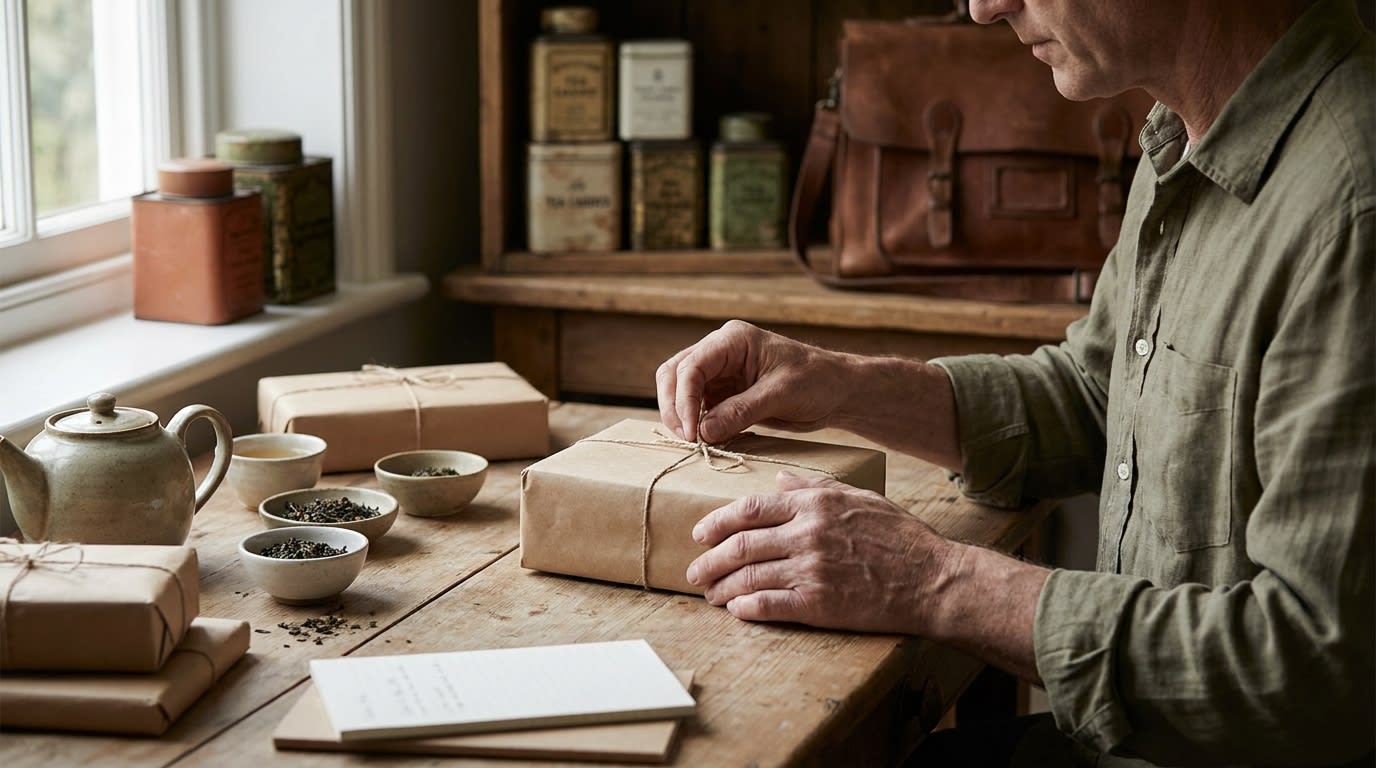
In 2026, you can buy loose leaf tea online in Australia from retailers who understand that a good sencha shouldn't arrive in a padded bag that's been sitting in a Queensland warehouse since March. The country's tea retail landscape has shifted — not dramatically, but with the kind of quiet competence that comes from a decade of supply chain refinement and a consumer base that now knows the difference between fannings and full-leaf grade.
This is not a sponsored roundup. It's a field guide built from actual orders, shipping experiences, and the kind of granular detail that matters when you're spending A$18 on 50 grams of high-mountain oolong.
**The Heritage Operators: Where Most Australians Start**
T2 remains the entry point for most Australians venturing beyond supermarket teabags. Founded in Melbourne in 1996, it's now owned by Unilever but retains a certain irreverent charm in its blending approach. Their strength lies in approachable flavoured blends — the Melbourne Breakfast remains a solid English-style breakfast tea at A$12 per 100g, and their Gorgeous Geisha is a sencha-based green that doesn't taste like lawn clippings. Shipping is free over A$60, typically arrives within 4–6 business days metro, 7–10 regional. Their loose-leaf grades are mid-tier; you're paying partly for the packaging and brand experience, but consistency is excellent. If you're buying for someone who uses the phrase "I don't really like tea," start here.
Tea Tonic, operating from Sydney since 2012, occupies a different register entirely. This is where you buy loose leaf tea online in Australia when you've progressed past flavoured blends and want clean, estate-specific teas. Their Japanese range — Sencha Yame from Fukuoka Prefecture, Gyokuro from Uji — is sourced with genuine care, and the difference is palpable in the cup. Expect A$20–35 per 100g for single-origin greens and oolongs. They're certified organic across most of their range, which matters if you're concerned about pesticide residues in tea from conventional farms. Shipping is A$10 flat rate, free over A$100. Three business days to Sydney and Melbourne metro addresses is standard. Their website copy can veer into wellness-speak, but the actual tea quality backs it up.
**The Specialists: When You Know What You Want**
Storm in a Teacup in Adelaide represents the Australian micro-roaster approach applied to tea. Founder Jarrod Meakin built the business around direct relationships with small-scale growers, particularly in Japan and Taiwan. If you're chasing competition-grade Taiwanese oolong or specific Japanese cultivars (Yabukita, Saemidori), this is your destination. Prices reflect the direct-import model: A$28–60 per 100g is common, sometimes higher for award-winning lots. Shipping from Adelaide can add 2–3 days to eastern seaboard deliveries, but packaging is meticulous — heat-sealed foil, cushioned boxes. Their quarterly subscription (A$85 for three 50g packets) is worth considering if you want education built into the experience; the notes that accompany each tea read like vintage reports.
Tielka, operating from the New South Wales Tablelands since 2009, does something unusual: they actually grow tea here. Their estate near Armidale produces small quantities of black, green, and oolong from Camellia sinensis plants adapted to the cool-climate conditions at 1,000 metres elevation. The Australian-grown teas (A$24 per 50g) carry a distinct terroir — more delicate than Assam, less grassy than Japanese greens, with a mineral quality that reflects the basalt soils. Yields are limited; their estate teas typically sell out by spring. Shipping is A$12, free over A$75. Four to six business days nationally is realistic. If you want to taste what Australian tea can be when it's not trying to replicate Darjeeling, order their Spring Harvest Green.
**The Direct Importers: For the Seriously Committed**
Madame Flavour in Melbourne operates at the intersection of tea retail and cultural education. Owner Sharyn Johnston imports directly from small gardens in China's Fujian and Yunnan provinces, often visiting producers personally. This is where you buy loose leaf tea online in Australia when you're ready to navigate the genuine complexity of puerh (both sheng and shou), high-fire Wuyi rock oolongs, and white teas that haven't been sitting in distributor warehouses for eighteen months. Prices range widely — A$15 per 50g for a decent Bai Mudan up to A$180 for aged puerh cakes. Shipping is free over A$80, typically 3–5 business days metro Melbourne, slightly longer interstate. Their gongfu brewing guides are legitimately useful, not decorative content.
The Tea Equation in Brisbane focuses almost entirely on Chinese tea, with a catalogue that assumes you understand terms like "kill-green" and "oxidation percentage." Their Tie Guan Yin oolongs (A$22–45 per 100g depending on grade) represent genuine value if you know how to assess leaf quality. Shipping is A$9.95, free over A$100. Their customer service is excellent for technical questions about brewing parameters and storage. Website navigation could be more intuitive, but the tea knowledge is deep.
**The Boutique Operators: Worth Watching**
Bird & Blend Tea Co. expanded from the UK to New Zealand in 2024 and now ships throughout Australia. Their strength is approachable blends with genuine creativity — the "Cheeky Vimto" is a hibiscus-based tisane that somehow works, and their "Spiced Pumpkin Pie" is an autumn rooibos blend that doesn't taste synthetic. Prices are reasonable (A$16–24 per 100g), shipping from their Auckland facility takes 8–12 business days to Australian addresses, which is the main limitation. If you're in Wellington or Auckland, local pickup is available.
The Tea Centre, Australia's oldest dedicated tea retailer (established 1984), maintains a solid online presence alongside their Melbourne physical stores. Their range skews traditional — reliable Ceylon, Assam, Darjeeling, orthodox Chinese greens — without the marketing flourish of newer entrants. Prices are competitive (A$12–28 per 100g for most single-origin teas), shipping is A$10 flat rate, free over A$80. Four business days to Melbourne, 5–7 elsewhere. If you want a no-nonsense Darjeeling first flush at A$24 per 100g without accompanying blog content about chakras, this is efficient.
**Price Brackets and What They Actually Mean**
In 2026, loose-leaf tea pricing in Australia breaks down predictably. Under A$15 per 100g: commercial-grade tea, often blends, sometimes single-origin blacks from large estates. Drinkable daily tea. A$15–30 per 100g: this is the quality threshold where origin specificity, organic certification, and careful sourcing become apparent. Most specialty retailers operate here. A$30–60 per 100g: estate-specific, competition-grade, or limited-production teas. First-flush Darjeelings, high-mountain oolongs, Japanese gyokuro. Above A$60 per 100g: aged puerh, competition-grade Taiwanese oolong, specific cultivar Japanese teas. You're paying for rarity, not just quality.
Shipping realities matter more than retailers often acknowledge. Express shipping (A$15–25) gets tea to metro addresses in 1–2 business days but rarely makes sense unless you're ordering something temperature-sensitive in January. Standard shipping (A$9–12, often free over A$75–100) is reliable enough that the extra cost isn't justified for shelf-stable dried leaf. Regional and remote addresses should add 3–5 business days to any estimate. Tasmania and northern WA can add another 2–4 days.
**Storage, Seasonality, and Buying Smart**
Australia's climate creates specific storage challenges. In Brisbane's February humidity, a poorly sealed Japanese green tea will lose its brightness within weeks. Most reputable online retailers ship in resealable foil pouches, but transferring to airtight tins or containers with oxygen absorbers extends shelf life substantially. Buy smaller quantities more frequently rather than bulk-buying teas that will oxidise before you drink them.
Seasonality affects availability more than many Australian buyers realise. Japanese first-flush greens arrive April–May. Darjeeling first flush peaks March–April, reaches Australia May–June. Chinese spring greens appear April–June. Taiwan's spring oolong harvest is March–May, autumn harvest October–November. Buying in-season means you're getting tea at peak freshness, often at slightly better prices before the "premium seasonal" markup kicks in.
**What the Import Labels Actually Tell You**
When you buy loose leaf tea online in Australia, country-of-origin labelling is mandatory, but it tells you less than you'd think. "Product of China" encompasses everything from machine-harvested commercial tea to hand-plucked single-estate lots. Look for more specific information: province or region (Fujian, Yunnan, Darjeeling, Uji), elevation (high-grown tea above 1,200m generally shows more complexity), estate name when available, harvest date or season (spring/first flush, autumn/second flush), and oxidation level for oolongs. Organic certification (ACO, NASAA in Australia) adds A$2–5 per 100g but ensures pesticide residues meet Australian standards, which are stricter than some origin countries.
**The Quiet Revolution in Australian Tea Retail**
What's changed in Australian online tea retail isn't dramatic — it's the accumulation of small improvements. Better packaging that maintains freshness. More transparent sourcing information. Shipping that's fast enough that you're not planning orders a fortnight in advance. A customer base educated enough that retailers can offer genuinely complex teas without defaulting to heavy blending.
The country still lacks the density of tea culture you'll find in the UK or Canada, but the available options in 2026 are legitimately good. You can buy estate-specific Japanese sencha, competition-grade Taiwanese oolong, small-lot Chinese puerh, and Australian-grown experimental teas without leaving your suburb. The prices reflect fair trade and proper storage. The shipping mostly works.
It's not perfect — selection still pales compared to specialist UK or US retailers, and shipping costs add friction to impulse purchases. But for most tea drinking in Australia, from everyday breakfast blends to weekend gongfu sessions, the infrastructure is finally adequate to the task.
Somewhere between Sydney's harbour-side cafes and Adelaide's hill-country estates, Australian tea retail found its footing — not trying to be London or Taipei, just reliably delivering good leaf to people who've learned to notice the difference.
Follow The Tea List