The First Australian Tea: Bickford's, Bushells and the Settler Tea Trade
Tea arrived on the First Fleet in 1788, but it took a century and two colonial grocers to turn Australia into one of the world's most devoted tea-drinking nations.
Sameera
June 28, 2026 · 9 min read
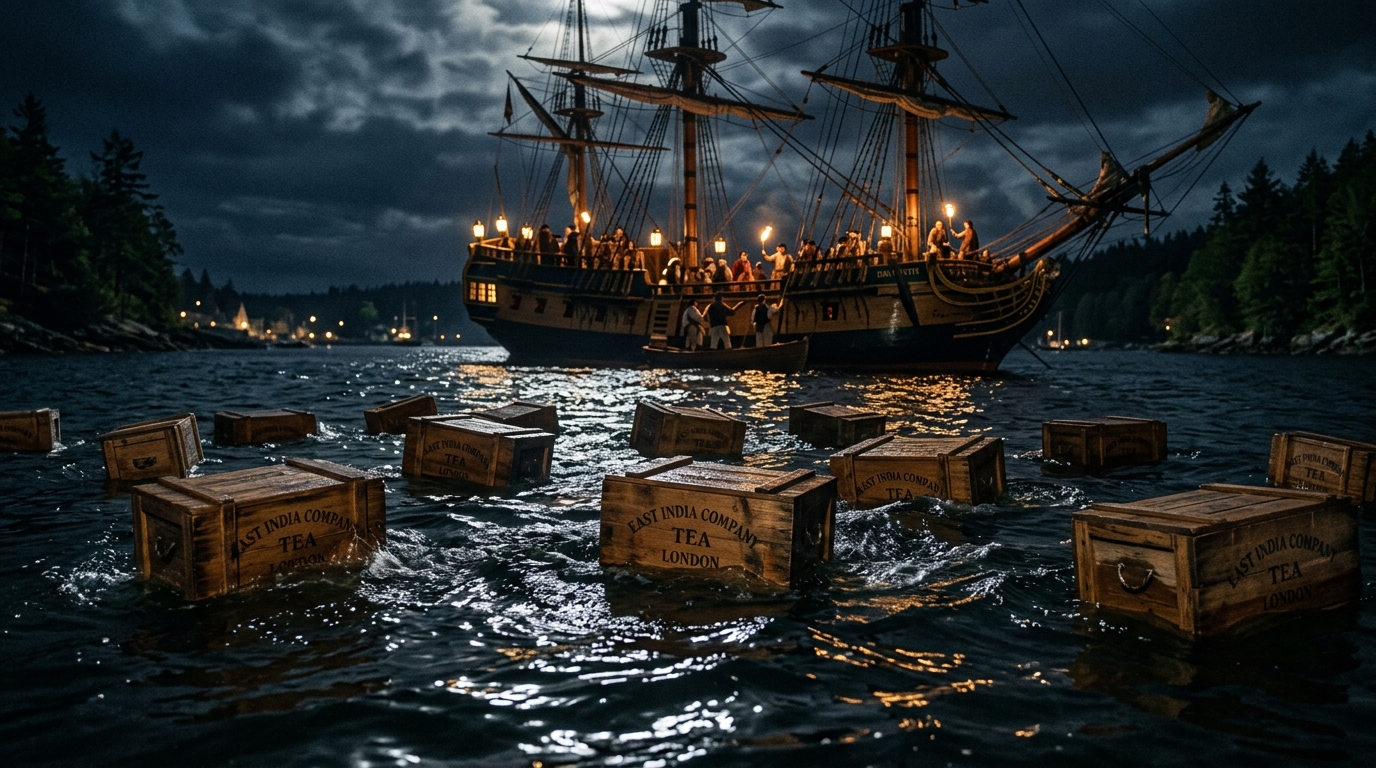
On 26 January 1788, eleven ships anchored in Sydney Cove carrying 1,487 people, livestock, farming tools, and approximately 180 kilograms of tea. The leaves had travelled 24,000 kilometres in wooden chests, through equatorial heat and Southern Ocean storms, to become one of the first luxury goods on Australian soil. That modest cargo would seed what became, by the 1950s, the second-highest per capita tea consumption in the world.
**The First Fleet's Tea Rations**
Tea wasn't listed as an official ration for convicts on the First Fleet, but officers, marines, and free settlers brought private stores. Arthur Phillip, the colony's first governor, mentioned tea in early correspondence, noting it was "much valued" and carefully portioned. The leaves were almost certainly Chinese black tea — likely Bohea or Congou varieties — purchased through the British East India Company's Canton monopoly. At two shillings per pound in London (roughly A$45 in today's money), tea was expensive enough that most convicts would have rarely tasted it before transportation.
Yet within three decades, tea had become the colony's universal drink. By 1822, NSW imported 45 tonnes annually. By 1850, that figure exceeded 450 tonnes. The reasons were practical: unlike milk or beer, tea required only boiling water and kept indefinitely in Australia's heat. It was safer than suspect water sources, more portable than coffee, and crucially, it was British. In a landscape that felt utterly foreign, tea offered a daily ritual of home.
**Bickford's: The Original Australian Tea Merchant**
Australia's first significant tea merchant wasn't a Sydney trader but an Adelaide chemist. William Bickford arrived in South Australia in 1839, a trained pharmacist from Yorkshire who opened a shop on King William Street. By 1847, he'd begun importing tea directly from London, blending and packaging it under his own name. Bickford's Tea became South Australia's premium brand, sold in decorative tins with illustrations of tea plantations — images that most customers would never see in reality.
What made Bickford's significant in Australian tea history wasn't just timing but method. Bickford understood terroir before the word entered common use. His "Extra Choice Blend" combined Assam leaves for body with Ceylon for brightness and Chinese Keemun for complexity — a trinity that became the template for Australian breakfast tea. He sold loose leaf exclusively, measured by the quarter-pound into paper packets, and his blends were strong enough to survive bush conditions and hard bore water.
Bickford's still exists, though the company pivoted to cordials in the 1930s. The original tea tins occasionally surface at Adelaide antique markets, their lithographed plantations faded to sepia.
**Bushells: The Tea That Built a Nation**
If Bickford's served the careful middle class, Bushells served everyone else. Alfred Bushell opened a small grocery in 1859 on George Street, Sydney, and began blending tea in the back room. His insight was simple but revolutionary: Australians wanted strong, consistent tea that could withstand boiling water and hard work. The bushland builders, shearers, miners, and railway workers didn't want delicate first flush Darjeeling. They wanted a brew that could be made in a billy can over an open fire and taste the same from Bourke to Broome.
Bushells Tea, launched as a branded product in 1883, delivered exactly that. The blend was almost entirely robust Ceylon and Assam black tea, with enough tannic backbone to cut through dust, sheep grease, and exhaustion. It was oxidised fully, withered longer, and rolled to release maximum flavour under harsh brewing conditions. A bushman could throw a handful into a billy, boil it within an inch of its life, and still get a drinkable cup.
By 1900, Bushells dominated the Australian tea market. The company's advertising was brilliant in its simplicity: "Bushells Tea — Makes You Feel Good." No exotic imagery, no Oriental fantasy — just an honest promise that resonated in a young country building itself through physical labour. The blue and gold tins became as ubiquitous as corrugated iron. In Queensland, "a cup of Bushells" wasn't a brand name; it was simply what you said when you wanted tea.
The Bushells factory in Sydney's Ultimo processed 50 tonnes of tea weekly by 1920. Blenders worked by nose and touch, assessing moisture content, leaf grade, and regional character. They created consistency through controlled variability — adjusting the Ceylon-to-Assam ratio based on seasonal quality to ensure every tin tasted identical. It was industrial-scale craft, and it made Australia a nation of tea drinkers who knew exactly what they wanted.
**The Tea Bag Revolution**
Australian tea history took its strangest turn in 1963 when Bushells introduced tea bags nationally. Australians, who'd spent 175 years brewing loose leaf in pots, teapots, and billy cans, adopted tea bags with startling speed. By 1970, tea bag sales exceeded loose leaf. By 1980, they represented 85% of the market.
Why did Australia embrace tea bags so completely? Partly convenience — the post-war kitchen prioritised efficiency. Partly marketing — Bushells positioned tea bags as modern and hygienic, not lazy. But mostly, it was because Australian tea had always been about function over ceremony. This wasn't Japan, where tea preparation was meditation. This wasn't Britain, where afternoon tea was theatre. This was Australia, where tea was fuel, and anything that made fuel faster was welcome.
The shift had consequences. Tea bag production required different leaf grades — smaller, more broken pieces that released flavour quickly. The dust and fannings that went into tea bags were technically lower grades, but in Australia's boil-it-hard culture, the difference was negligible. Gongfu brewing and whole-leaf appreciation would come later, imported by immigrants and speciality retailers. For most of the 20th century, Australian tea was robust, bagged, and milky.
T2, founded in Melbourne in 1996, would eventually lead the speciality tea renaissance, but that's another story. The mass market remained loyal to its bags.
**The Climate That Shaped Our Tea**
Australia's relationship with tea was shaped partly by what we couldn't grow. Unlike India or Ceylon, Australia had no successful commercial tea industry until the 1970s (and even then, only small-scale attempts in northern NSW and Queensland). We were entirely dependent on imports, which meant our tea culture developed around preserved, shelf-stable products designed to survive long sea voyages.
This explains the Australian preference for heavily oxidised black tea over green tea. Green tea requires more careful storage and loses character faster — a liability in pre-refrigeration Australia. Black tea improved with the journey, its flavours mellowing and integrating during months at sea. By the time Camellia sinensis leaves reached Australian shops, they'd undergone a secondary aging that made them smoother and more forgiving of rough brewing.
Australia's hard water — particularly in Sydney, Melbourne, and Adelaide — also shaped our tea. High mineral content requires stronger tea to achieve flavour, which is why Bushells and other Australian brands were (and are) noticeably more robust than their British equivalents. The same blend that tastes perfect in Adelaide would seem overwhelming in London.
**The Grocery Giants and Competition**
Bushells didn't remain unchallenged. Robur Tea, Lan Choo Tea, and Liptons all competed for Australian consumers through the early 20th century. Each claimed superior blending, fresher leaves, or secret processes. Robur, manufactured in Melbourne, briefly outsold Bushells in Victoria with aggressive regional marketing. But none achieved Bushells' national dominance or cultural penetration.
The real shift came when grocery chains — Woolworths, Coles, Franklins — introduced home brand tea in the 1960s. These weren't carefully blended products but commodity black tea in plain packaging, sold on price alone. Quality varied wildly. Yet they carved away market share, teaching a generation of Australians that tea was interchangeable.
Bushells responded by moving upmarket, introducing Blue Label and Extra Strong variants. They emphasised heritage and consistency, positioning themselves as premium without being pretentious. It worked. Even today, in a market flooded with speciality options, Bushells remains Australia's best-selling tea brand.
**What Australian Tea History Teaches Us**
The story of Australian tea isn't about plantations or ancient traditions — we have neither. It's about adaptation: how a transplanted culture modified a foreign ritual to suit new conditions. Australian tea became strong because our water was hard and our work was physical. It became bagged because efficiency mattered more than ceremony. It became ubiquitous because tea was one of the few things that felt like home in a place that wasn't.
Walk into any Australian supermarket today and the tea aisle tells this story. There's Bushells in its unchanged packaging, next to Twinings (British import) and Dilmah (Sri Lankan import), alongside T2's boutique tins and a dozen boutique brands serving the speciality market. Home brands occupy the bottom shelf. Herbal infusions — technically not tea at all, since they contain no Camellia sinensis — get their own section.
Yet for all this diversity, most Australians still drink the same strong, black, bagged tea that Alfred Bushell first blended 140 years ago. We've added oat milk and specialty kettles, but the fundamental brew remains: Ceylon and Assam, fully oxidised, steeped hard, taken with milk. It's not sophisticated or ceremonial. It's simply ours.
The First Fleet's 180 kilograms of tea has multiplied into roughly 30,000 tonnes imported annually, making Australia one of the world's top twenty tea-consuming nations despite having no historical tea culture. That's the strange power of ritual in displacement — how a beverage from Fujian Province became as Australian as eucalyptus.
Follow The Tea List